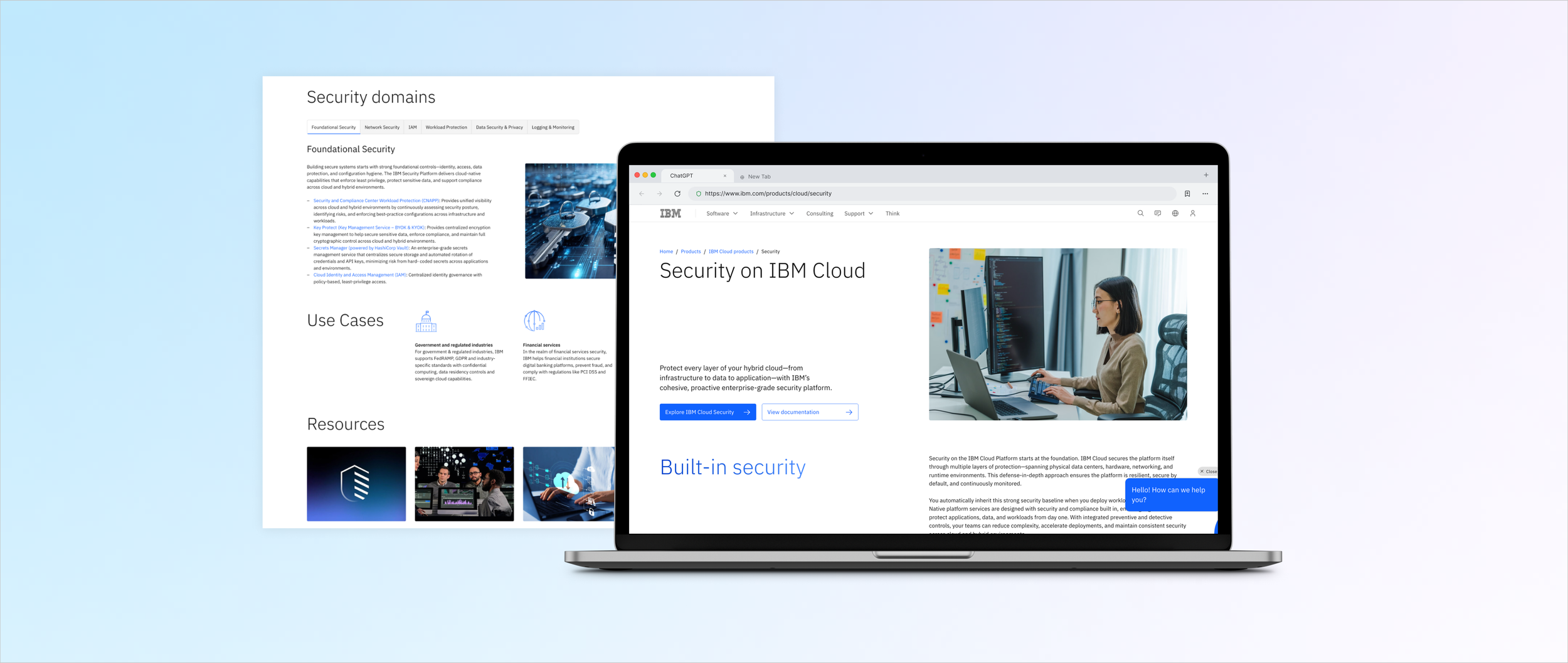
Case Study
Squad
1 Product Designer
3 Product Manager
2 Developers
The Problem
Customers evaluating IBM Cloud Security encountered different messages, terminology, and levels of detail as they moved between the marketing site, product catalog, documentation, and Security Hub. As a result, it was often difficult to understand how IBM's security offerings worked together or how they supported broader security and compliance goals.
To better understand how customers discover, evaluate, and adopt IBM Cloud Security, I audited the current journey across Marketing, Catalog, Security Hub, and Documentation. I paired this analysis with page engagement data, stakeholder insights, and competitor sites to identify gaps in messaging, discoverability, and experience.
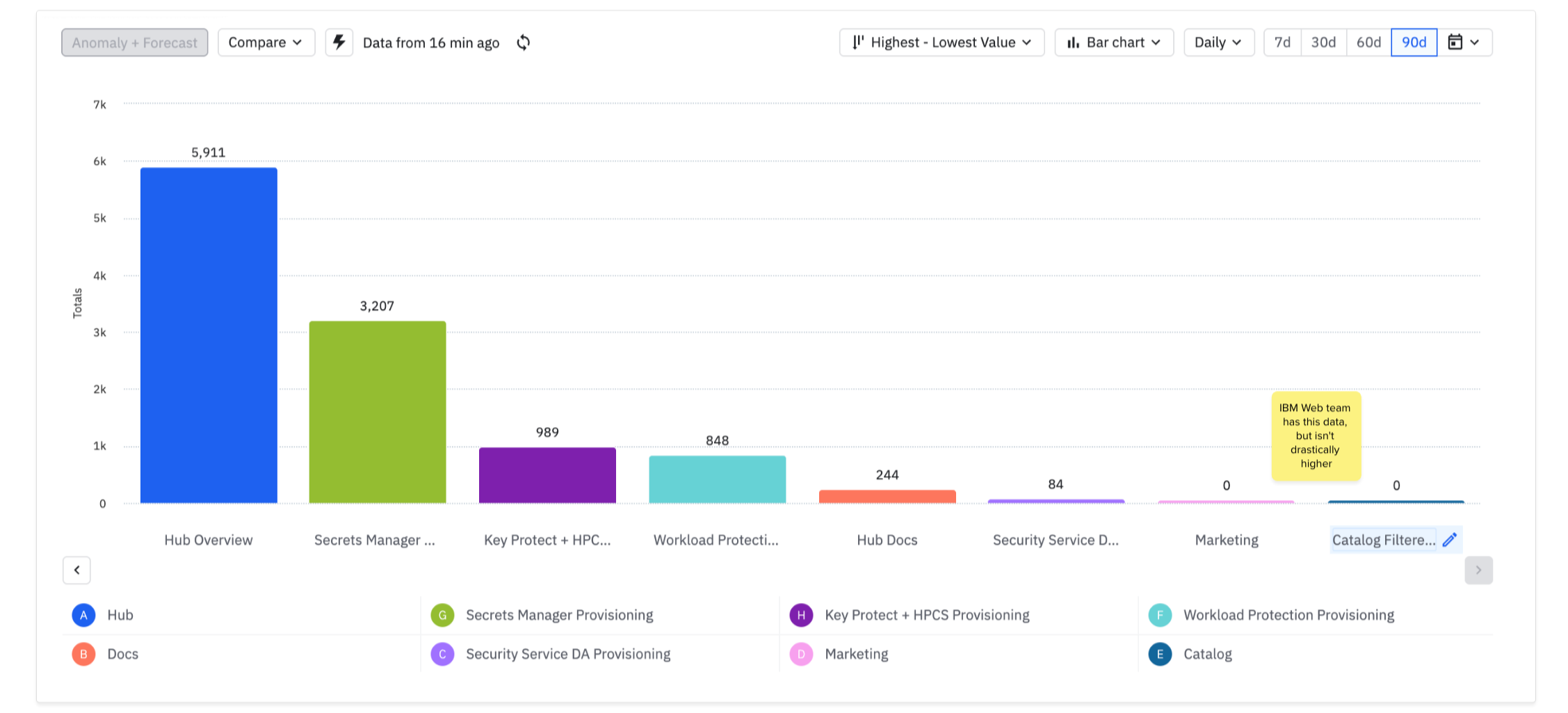
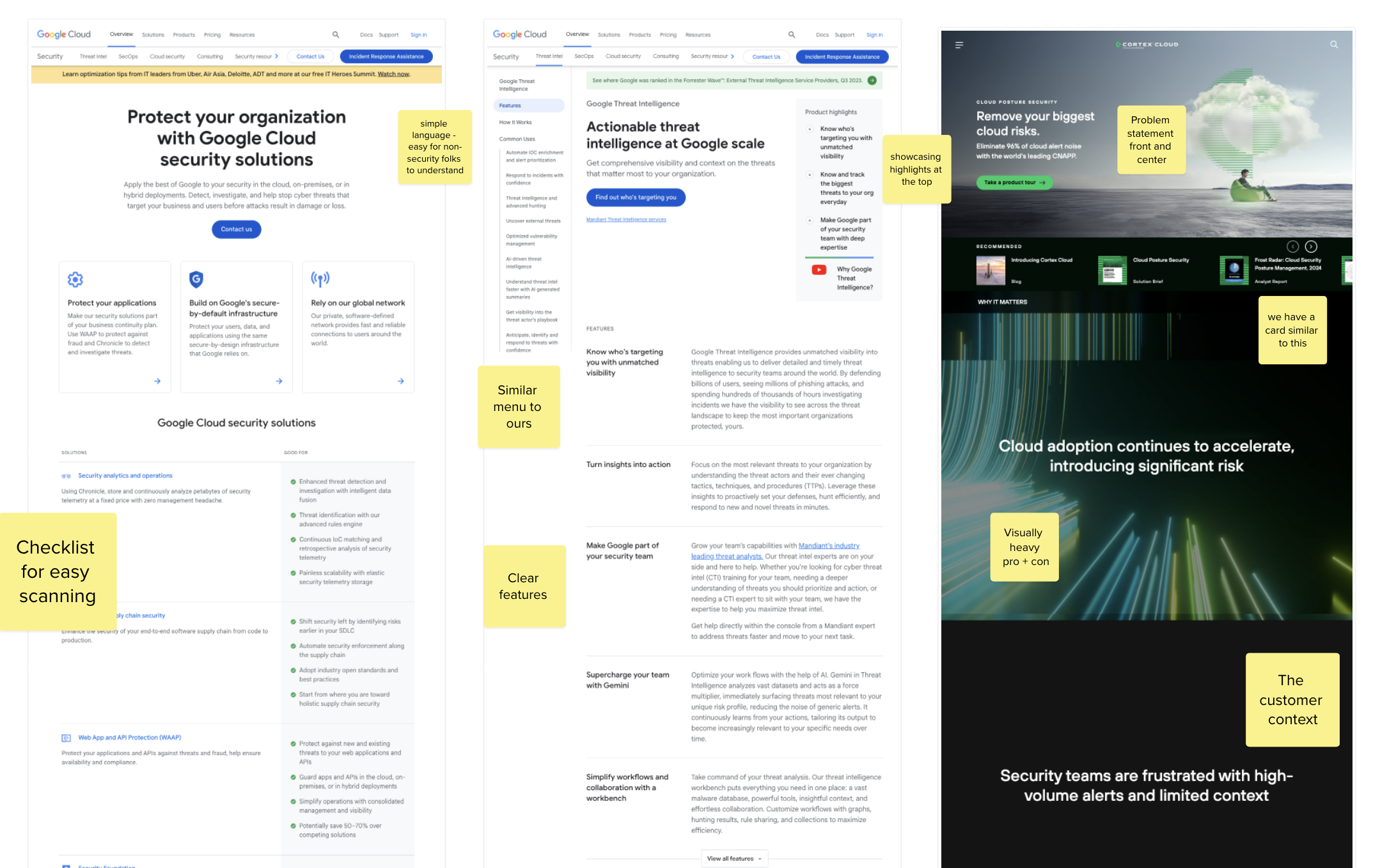
This audit surfaced several recurring challenges:
No holistic view of IBM Cloud Security offerings across IaaS and PaaS.
Inconsistent messaging and terminology between touch points.
Limited use of customer use cases and solution-driven narratives.
Little guidance for users transitioning between experiences.
Significant drop-off between security touch points across the ecosystem, just marketing.
What began as a redesign of the Security marketing page quickly evolved into a broader messaging and discoverability challenge. The central question became:
How might we help potential customers understand the full IBM Cloud Security story, regardless of where they enter our ecosystem?
Defining the Security Narrative
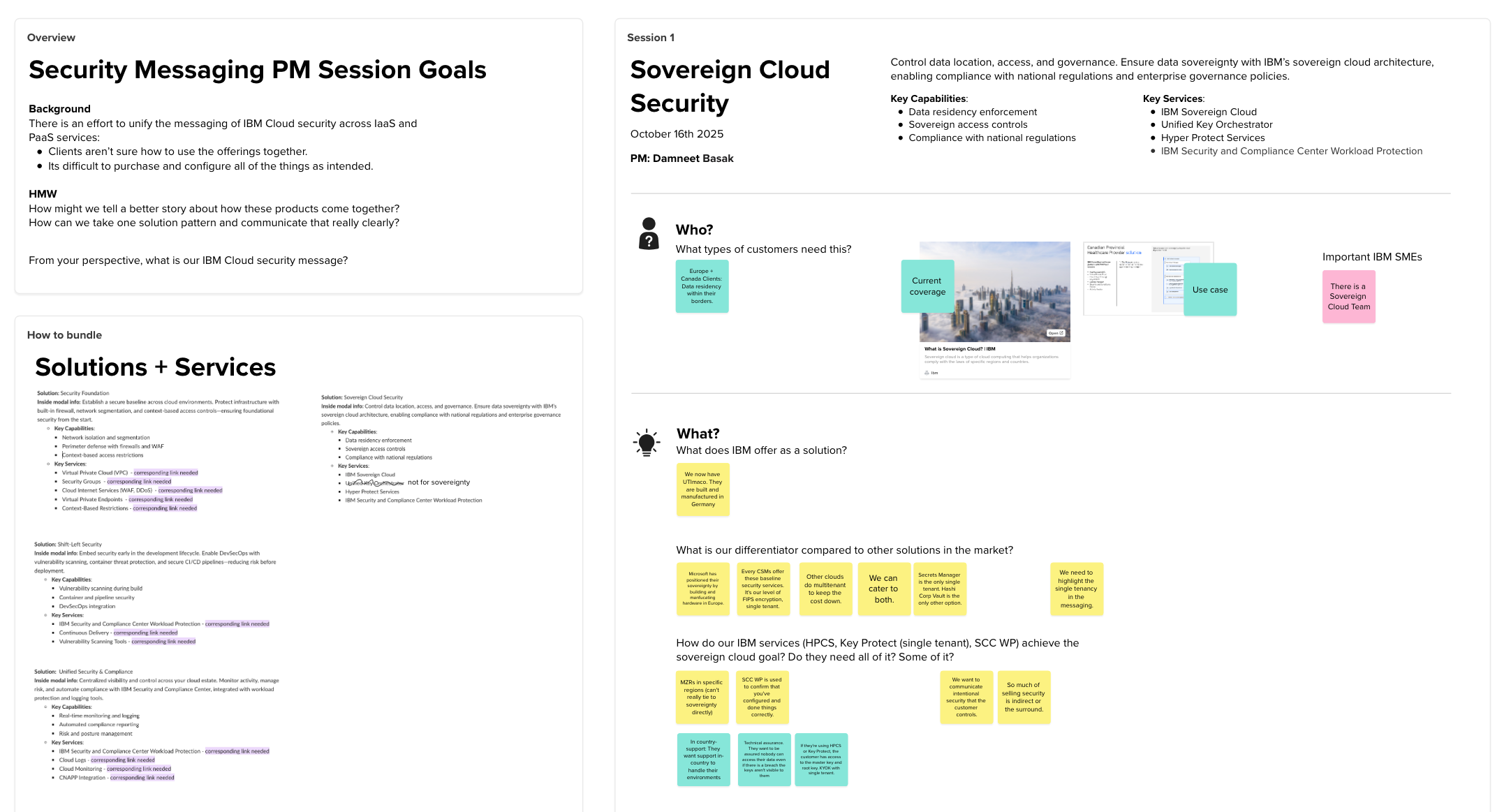
We partnered with product managers across IBM Cloud Security to align on the story we wanted to tell. Each team brought a unique perspective shaped by their product area, making it difficult to identify a consistent narrative across the portfolio. To uncover common themes, we conducted a series of stakeholder interviews, synthesizing insights across teams to identify key priorities, customer needs, and differentiators. We then played our findings back to the broader group, helping stakeholders align around a shared vision for how IBM Cloud Security should be presented to prospective customers.
The final narrative centered around three key messages:
Security is built into the foundation of IBM Cloud, providing customers with a secure infrastructure from day one rather than requiring extensive configuration after deployment.
Customers don't need another standalone security tool, they need continuous governance across identities, workloads, data, compliance, and AI as their environments evolve. This ability to provide end-to-end security and compliance across the cloud lifecycle became a key differentiator in our messaging strategy.
IBM Cloud Security is purpose-built for regulated industries, helping organizations address complex compliance, sovereignty, and security requirements.
These principles became the foundation for the redesigned marketing experience and informed both the page structure and the messaging validation research that followed.
Design Strategy
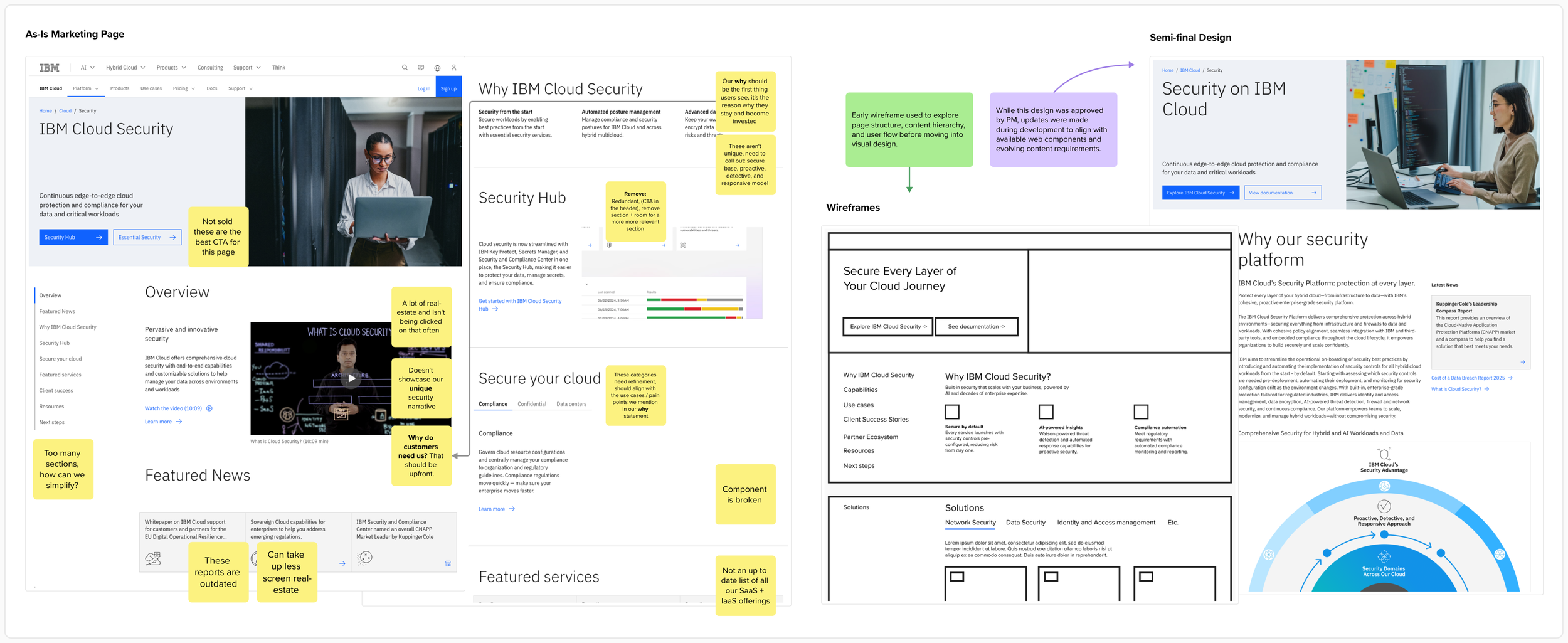
After aligning on our messaging, we focused on marketing site as the first touchpoint to improve.
Redesign Focus:
Creating a Unified Security Narrative: Restructure content around customer needs rather than individual services, helping visitors understand how IBM's offerings work together to solve security and compliance challenges.
Improving Discoverability: Introduce clearer pathways into security domains, use cases, and supporting resources, making it easier for visitors to explore IBM's security portfolio.
Reducing Cognitive Load: Simplify content, improve hierarchy, and organize information around scannable sections that supported quick evaluation and comparison.
Creating Stronger Ecosystem Connections: Supporting transitions between marketing, catalog, documentation, and product experiences, reducing context loss throughout the customer journey.
Following several rounds of wireframes, high-fidelity designs, and stakeholder reviews, the final experience was handed off to the web team for implementation in late 2025.
Messaging Validation Research
While implementation was underway, we conducted a dedicated messaging validation study to ensure the content resonated with prospective buyers.
The study focused on evaluating the proposed messaging rather than the visual design. Through a series of moderated 60-minute interviews, participants reviewed key sections of the marketing experience, including the value proposition, security narratives, use cases, and differentiators. After each section, we asked participants to assess clarity, relevance, credibility, and whether the content helped them better understand IBM Cloud Security and its value.
We interviewed 11 external participants, including CISOs, CTOs, Directors of Security, Solutions Architects, and Cybersecurity leaders across healthcare, financial services, technology, telecommunications, and other highly regulated industries. Participants represented the types of decision-makers who influence or approve cloud security purchases.
The goal was to understand whether the messaging clearly communicated IBM's value, addressed common customer challenges, and helped prospective buyers confidently evaluate IBM Cloud Security alongside competing providers.
Key Research Findings:
Clarify IBM's Differentiation: Many participants still felt the messaging sounded similar to competing cloud providers. Buyers wanted clearer explanation of what uniquely positioned IBM, particularly for regulated industries.
Write for Quick Scanning: Participants consistently skimmed content in search of specific signals, capabilities, compliance standards, and use cases. Messaging needed to communicate value within seconds.
Build Confidence Through Proof: Decision-makers looked for evidence such as analyst reports, customer success stories, certifications, partnerships, and industry validation before moving forward.
These findings informed a final round of content refinements before launch.
Outcome
The redesigned IBM Cloud Security marketing experience went live in January 2026, establishing a clearer and more cohesive introduction to IBM's security offerings. More importantly, the project uncovered gaps between Marketing, Catalog, Security Hub, and Documentation that made it difficult for customers to maintain context as they moved through their journey. These insights have since informed roadmap initiatives focused on strengthening connections between touch points and creating a more seamless experience from discovery through adoption.
Discover & Buy IBM Cloud Security Services
My Role
I led the UX effort for the initiative, partnering closely with product management, and engineering teams to define a unified security narrative and update the existing marketing experience. My responsibilities included ecosystem auditing, competitive analysis, wireframing and design execution, UX research, and handoff to implementation teams.